|
|
|||

|

|
|

|
|
|
|||
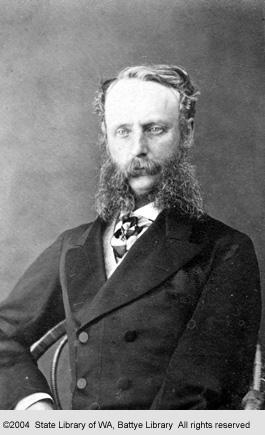
FREDERICK ALOYSIUS WELD1823 - 1891
|
|
|
|
|
Frederick Weld was unusual in a number of respects. Firstly he was a Catholic, something that usually precluded success in Government service in the 1800s, and secondly he
was an aristocrat with truly liberal ideas. (that is liberal in the sense of justice and fair play - not Liberal in the sense of the Liberal National Party that represents conservatism
and repression of the ordinary people.)
|
|
Weld visited the Nichol Bay area to see for himself the abuses of Aboriginal and Asian labour that had been reported to him. As a result in instituted laws regulating employment and prohibiting the use of Aboriginal women as pearl divers. In 1871 he passed the Bastardy Act to attempt to make white fathers take care of an half-caste children they fathered. In 1873 he passed the Pearl Shell Fisheries Act that that further regulated who could be employed and under what conditions. In 1874 came the Apprentices Act that regulates conditions between Master and Apprentice and the following year proposed and Act to protect animal species during breeding seasons.
It was Weld's attempts to get justice for the Aborigines that met with most opposition. His attempts to change the prevailing conditions - especially in the Gascoyne and Pilbara - were largely ignored and nothing else was to be done until the arrival of Governor Broome.
It was Weld who sent John Forrest on an expedition to find a route for the overland telegraph line.
Thomas Campbell-Cockburn wrote of him:
'Essentially an aristocrat by birth and breeding, in appearance and temperament, he was yet a true liberal in the best sense of the word. He had the reverence of a Christian gentleman for the poor and lowly, and the suffering.'
In 1875 Weld was transferred to Tasmania. In 1880 he was knighted and went on to serve as Governor of the Straits Settlement (Singapore) until 1887.
Chronology
1823 - Born 9th May at Chideock, Dorset, England. 1843 - Goes to New Zealand and took up sheep farming. 1848 - Joined the Wellington Settlers' Constitutional Association. 1852 - Published 'Hints to Intending Sheep Farmers in New Zealand'. 1852 - Elected for the district of Wairau in the Legislative Assembly. 1854 - Explored inland areas of the north island. 1855 - Journeyed to England. 1859 - Married Filumena Mary Phillips in England. 1860 - Returned to New Zealand and became minister for native affairs. 1864 - Premier of New Zealand. 1867 - Resigned and returned to England.. 1868 - Appointed governor of Western Australia. 1869 - Arrived in Western Australia in September. 1870 - Set up a Legislative Council with 12 elected members. 1871 - Rode to Albany. 1871 - Passed the 'Bastardy Act' to attempt to make white fathers take care of an half-caste children they had fathered. 1873 - Travelled extensively in the Geraldton area. 1873 - Pearl Shell Fisheries Act. 1875 - Governor of Tasmania. 1879 - Appointed governor of the Straits Settlements. 1887 - Retired and returned to England. 1891 - Died 20th July.
Links to more information:
Weld, Sir Frederick Aloysius (1823-1891)
|
|
|
Become a supporter of this website for just $5 a month
|