DESCRIPTION
Hopetoun has had a history of ups and downs and so it continues today, with mining ventures promising to revive the area and then departing again in
a short time.
The town is quite remote in many respects and still lacks many of the services available in larger towns. This accounts for the fact that it
remains relatively unspoiled and quiet.
Even so the area is famous for its coastal scenery and attractive campsites.
Located on the coast south of Ravensthorpe, Hopetoun is the gateway to the Fitzgerald
River National Park situated just west of the town.
To the east are coastal campsites at Munglinup Beach, Mason Bay and Starvation Boat Harbour.
The area is rich with wildflowers and due to the climate, they are in bloom here much longer than in other areas.
HISTORY
Matthew Flinders charted the coast
in this area in 1802 and by the 1820s whalers were using bays to shelter during rough weather.
Land based exploration started with
Eyre in 1841 as he passed
this way after crossing the Nullarbor.
The town developed after gold was discovered near Ravensthorpe in 1899 and by 1900 the first buildings began
to appear. The Phillips River gold field was declared and Hopetoun became the nearest port for the import and export of goods. The townsite was
gazetted on February 9th 1901.
Originally known as Mary Anne Harbour, the town was re-named in 1901 after Lord Hopetoun (John Adrian Louis Hope) the 1st Governor-General
after federation. The original name was said to come from the daughter of a whaler who lived in the area in the 1820s.
A railway to Ravensthorpe was opened in 1909 but closed in 1925. The port declined and was
effectively closed by 1936. The jetty survived for some years but finally in 1983 it succumbed to time and the elements.
The first long term settlers, the Dunn brothers, arrived in the 1860s to establish a sheep station. Dunn accompanied
John Forrest when he was exploring
in the area and a memorial to the event is located 6 km along Forrest Road. (This road is 10 north of town west of Hopetoun Road.)
John Dunn, who is thought to have been temporarily marooned in the area before he decided to settle there, was killed by Aborigines in 1880.
Dunn's grave is located on Cocanarup Road west of Ravensthorpe.
In 1943 a salmon fishery began operating at 12 Mile Beach. It should be noted that Australian salmon are not related to salmon caught
in the northern hemisphere and are instead more closely related to Australian Herring (also known as Tommy rough.)
A salmon cannery was built in 1947 to process the fish that were being caught locally.
The world's longest fence (Rabbit Proof Fence) starts just east of the town at
Starvation Bay and finishes
at Eighty Mile Beach, east of Port Hedland. By the time the fence had
been constructed the rabbits had already passed it and two other fences were built but neither did much to stop the invasion from the east.
TALL TALES AND TRUE
No information for this section yet. If you know of something we can add here please contact us and let us know.
VIDEO
PROBLEM PLAYING THESE ON FIREFOX?
Turn off Enhanced Tracking Protection
Click the shield icon left of the URL near the top left
Slide Advanced Tracking Protection to OFF
OTHER INFORMATION
ATTRACTIONS
Fitzgerald River National Park, 2 mile beach, 4 mile beach, 5 mile beach, 12 mile beach, West beach, Barrens beach, Starvation Boat Harbour,
Masons Bay, Culham Inlet, Powell Point, Dunn's Swamp, Beacon Hill lookout, Phillips River, East Mt. Barron walk, Sepucralis lookout, Point Ann, East Mylies beach,
Hamersley beach, Whalebone beach, Quoin Head,
Southern Ocean Discovery Centre.
BUILDINGS OF NOTE
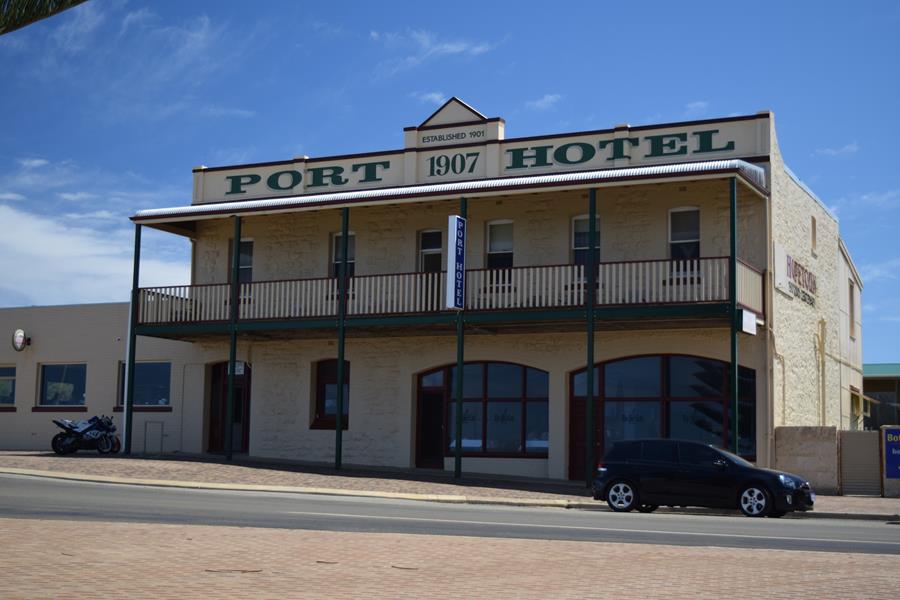
Port Hotel.
ELECTORAL ZONES
State : Eyre
Federal : O'Connor
OTHER INFO.
Postcode : 6348
Local Government : Shire of Ravensthorpe
PHOTOS
Click on a thumbnail to see full sized picture.
Please note that using the https url will cause the photos not to show. To show photos use the standard http url.