DESCRIPTION
Goomalling township is situated in the Central Wheat belt area of Western Australia, 132km north east of Perth.
The name was derived from the Koomal Possum which inhabited the area in abundance when the district was first established. Now known as 'Place of the silver grey possum.'
Goomalling was also called 'Coomarin' or 'Coomallyn'. The current name was first used by Alfred Hillman in 1846.
The present population of the Shire (as opposed to just the town) is approximately 1200. The district produces several varieties of wheat, lupins, wool, beef, cattle, pigs, fat lambs etc.
The Goomalling Historical Society has placed sign posts on the old school sites within the Shire - many can be spotted on the road verges.
Information of the local heritage trail is available from the Telecentre or Caravan Park. The walk points out places of historical significance around the town site of Goomalling.
Although only a small town with limited shopping facilities, Goomalling is a very nice place to stop and relax for a few days and it is fortunate in being at the centre of a number of
other towns that can be reached in a series of days trips.
Suggested day trips from Goomalling:
1. From Goomalling you can head north to Wongan Hills and then travel east to Cadoux, south to Dowerin and back
to your starting point.
2. Travel south west to Toodyay and then you can chose to go south to Clackline, then follow the Great Eastern Highway either west to Chidlow
and north to Noble Falls before returning via Toodyay again, or you can turn east to Northam and then north to Jennacubbine and back to Goomalling.
3. The last tour is south east to Meckering then along the Great Eastern Highway through Cunderdin and Tammin and nearby
Hunt's Well before turning north to Wyalkatchem and then returning via Dowerin.
Each of these trips is on sealed roads and will take you to a number of interesting places and covers a wide range of different terrain, ranging from thick forest around Chidlow to salt
lake country near Cadoux and along the Goldfields Water Scheme.
The caravan park is one of the best shire parks in the state and is run by a very friendly and helpful couple. There is also an excellent hardware store just over the railway line (on the
Dowerin road) which is (in general) cheaper than the hardware stores in Northam.
Goomalling is a wonderful example of good old fashioned country hospitality and town pride.
HISTORY
The district was first explored in 1854 by Assistant Surveyor Austin,
and the Benedictine Monks of New Norcia held extensive grazing rights in the area.
As land further west was taken up, shepherds moved further east and they were followed by pastoralists and land was taken up around Goomalling Spring.
The earliest white settler in the district was Mr George Slater and "Slater Homestead" still stands about 3km east of the town. Slater was a successful breeder of horses
and at one time was said to have sold in excess of 1,000 in a year.
Sandalwood cutting was another early industry but when it was realised that the roots of the parasitic plant were also valuable, much of the existing stocks were ripped
from the earth and the supply eventually collapsed.
When gold was discovered at Yilgarn the farmers around Goomalling found themselves on one of the major routes to the goldfield and were able to make good profits from
carting goods and selling supplies to the prospectors. The effect of gold on the state's economy can be seen in the export value which rose from 1148 pounds in 1886 to
over 6 million pounds by the turn of the century.
The first Road Board was formed in 1895 and not long afterwards there was pressure to get a railway line extended from Northam.
In January 1900 work on the railway line started and local farmers expected that it would be complete by the time of the next harvest. As it turned out, sleepers for the line
were 'mysteriously' diverted to a private consortium in Kalgoorlie and the line to Goomalling was put on hold. A year after the line was started it had only reached 9 miles from
Northam. By August 1901 another 10 miles had been added and although some wheat was now being moved by rail it was costing farmers twice what was charged on other
lines. The line was completed by the end of June 1902. It had taken two and a half years to build just 30 miles of track.
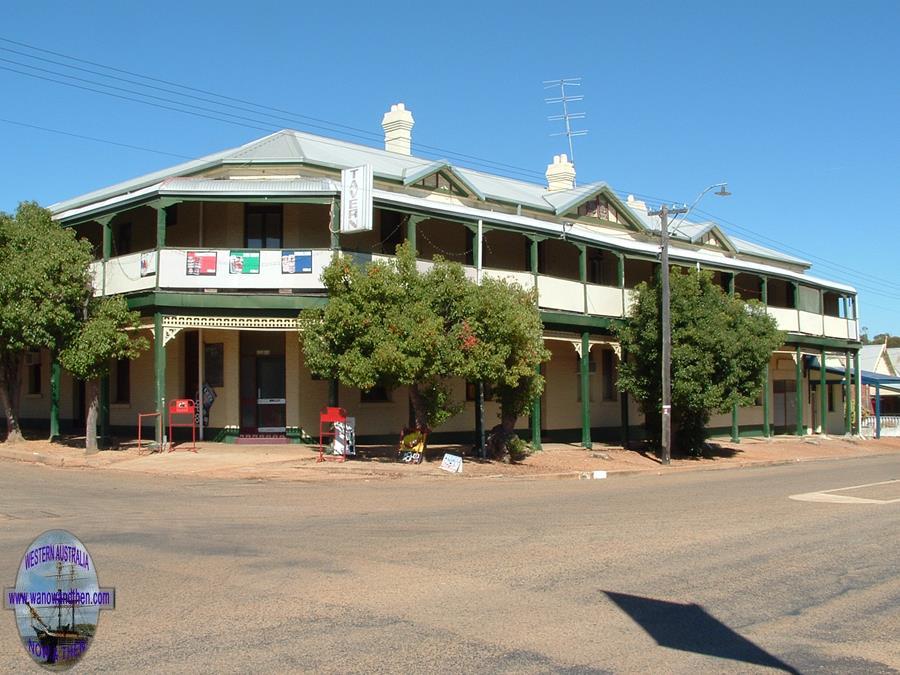
Goomalling was declared a township in August 1903 and lot number 1 was purchased by John Collins for 35 pounds. The town site developed quickly with the coming of the
railway and the hotel (that still exists) was built in 1904.
Like many small country towns, Goomalling contributed more than it's fair share of enlistments for both world wars. World War One saw 135 men enlist with 19 killed in action.
In the Second World War 207 enlisted and 15 did not return.
TALL TALES AND TRUE
Rescue gone wrong.
Charles Chitty employed an Aboriginal man he called John Bull. When John was minding sheep out at Catabody (near Batbatting) in 1918 he witnessed a white man fall into a well.
John rushed to get the man out but in so doing he saved the stranger but fell into the well himself and sadly drowned.
VIDEO
PROBLEM PLAYING THESE ON FIREFOX?
Turn off Enhanced Tracking Protection
Click the shield icon left of the URL near the top left
Slide Advanced Tracking Protection to OFF
OTHER INFORMATION
ATTRACTIONS
Museum. Old railway station, Oak Park.
BUILDINGS OF NOTE
Old cordial Factory, Masonic Hall, Mechanics Institute, Methodist Manse, CWA hall, Anglican church, Hotel, Road Board building, Railway station, Slater Homestead 1852.
ELECTORAL ZONES
State : Central Wheatbelt
Federal : Durack
OTHER INFO.
Postcode : 6460
Local Government : Shire of Goomalling
PHOTOS
Click on a thumbnail to see full sized picture.