DESCRIPTION
Woodanilling is located in the Great Southern region of Western Australia. It sits between the larger towns of Wagin to the north and
Katanning to the south.
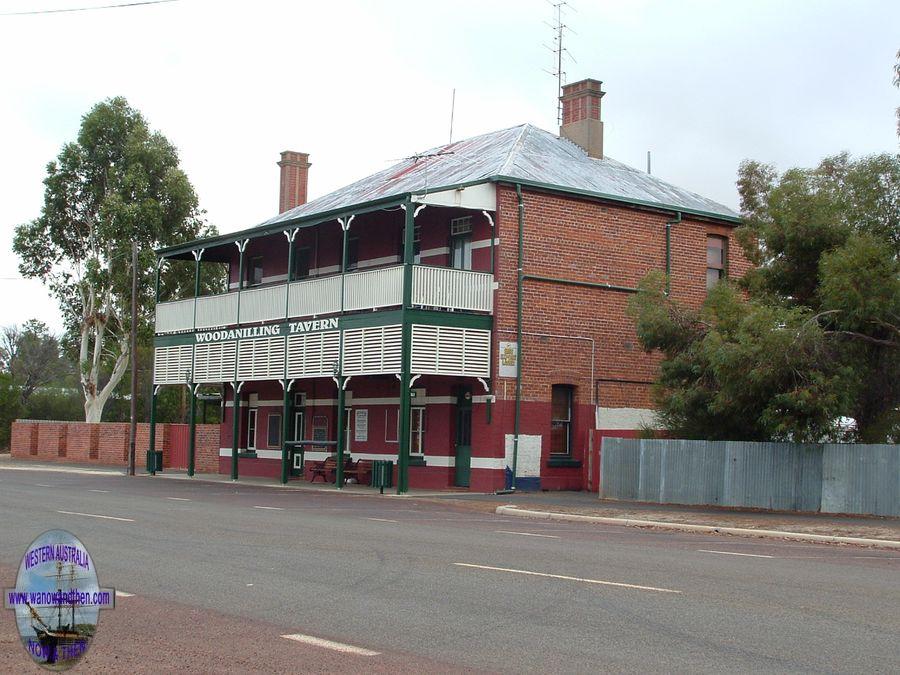
Sadly the Woodanilling Tavern is now permanently closed.
There is a self-contained 72 hour rest stop in Woodanilling located at the sports ground. A small donation is requested for overnight stops.
There is a black water dump point and potable water available. It is a nice quiet place to stop and is walking distance to the main area of town.
There are some interesting attractions located within the shire including Queerearrup Lake. When water levels were higher this was a recreation area used
for water skiing and swimming. These days it is a pleasant picnic spot and a place to check out the local wildlife. There are toilets, BBQs, shelters, seats, tables and
untreated tank water available.
On the way to Queerearrup Lake you will pass Kenmare Hall. This hall has been restored and contained some interesting historic information about the area.
Another good overnight rest stop is Woodanilling Pool that is located west of town near the corner of Robinson Road and Albany Highway. The pool is
best reached via an unsealed track leading along the river from the Martup Pool rest area along Albany Highway a little south of the Robinson Road
turn off.
HISTORY
Captain Bannister
was probably the first European to pass through this area and he was followed by
J.S. Roe
and then by Alfred Hillman.
Governor Stirling,
who was always on the lookout for land to fill up the enormous grant of 100,000 acres he had been given, came through
the area to look at it for himself. He was followed by
Henry Maxwell Lefroy
and Henry Landor and although these explorations all took place before 1843, is was a long time before the first settlers arrived.
Elijah Quartermaine grazed sheep in the area from around 1850 and in 1852 Edward Hamersley took up a pastoral lease on the Bedford River but
it was sandalwood that first drew people to the area.
Originally known as Yarabin the townsite was surveyed and gazetted in 1892 as Woodanilling. The name originates from a spring in Boyerine
Creek about a kilometre south of the town. It is Aboriginal in origin and may relate to either bronze wing pigeons or minnows.
Originally nothing more than a railway siding, the first inhabitant of the town was a railway ganger called Harry Stevens. There was no
station master to start with and mail was simply dropped by the tracks for anyone who was passing to sort out.
Mrs. Stevens voluntarily took on the job of looking after and sorting the mail and eventually her services were officially recognised
and she was awarded a wage.
The town's first hotel was built in 1900 (the hotel you see today was built in 1908) and a Road Board established in 1906. By about this
time there were a number of buildings in town including a Blacksmith, Wheelwright, 5 General Stores, Post Office, Banks, Hotel, Hospital,
School, Bakery, Church, Barbers, Boarding House, Saddlery Shop, Railway Station, and the first trotting track outside the Perth Metro area.
One of the oldest buildings in town (in fact in the whole area) is the general store. It was built in 1880 and as it is the only one
still operating in town, it outlasted the 4 other competitors that once supplied goods to some 800 townspeople.
In April 1920 there was a mini-gold rush when someone claimed to have found a nugget. When no other gold was found everything settled
down again and the fact that the original 'strike' was made on April 1st may have had some significance.
TALL TALES AND TRUE
No information for this section yet. If you know of something we can add here please contact us and let us know.
VIDEO
PROBLEM PLAYING THESE ON FIREFOX?
Turn off Enhanced Tracking Protection
Click the shield icon left of the URL near the top left
Slide Advanced Tracking Protection to OFF
Nothing available at this time.
OTHER INFORMATION
ATTRACTIONS
Queerearrup Lake, Martup Pool, Heritage Trail, King Rock, Wingedyne nature reserve, Marracoonda church, Kenmore Hall.
BUILDINGS OF NOTE
Tavern, Church.
ELECTORAL ZONES
State : Wagin
Federal : O'Connor
OTHER INFO.
Postcode : 6316
Local Government : Shire of Woodanilling
PHOTOS
Click on a thumbnail to see full sized picture.
Please note that using the https url will cause the photos not to show. To show photos use the standard http url.