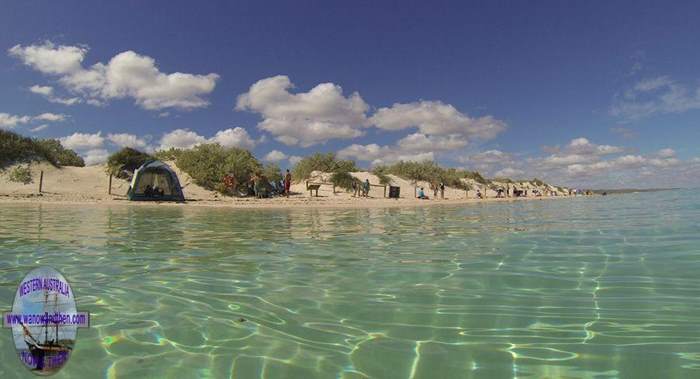
|
An area of land comprising the Exmouth Peninsular, and Cape Range. The cape was named in 1818 by
P.P. King.
It did have an alternate name, Cape Murat, given by
Nicolas Baudin
but it was King's choice of name that was adopted.
The cape is bordered on the west by Ningaloo Reef, and on the east by Exmouth Gulf.
Areas of interest include Coral Bay, Ningaloo Marine Park, Cape Range National Park,
Exmouth town site, Kailis Fisheries,
Vlamingh Head lighthouse, Milyering Visitor Centre, Yardie Creek, and the canyons that are accessed from the Exmouth road.
The Range was once part of an ocean floor and it contains a large number of marine fossils.
Cape Range is a rugged outcrop of hills running south from Exmouth almost all the way to Coral Bay. At its highest point it reaches 314 metres and contains
a number of weathered canyons. Two, Potshot and Charles Knife, are within easy reach of Exmouth town.
A 4wd trip down the west side of the range with a stop off at Yardie Creek is a must for all those with adventurous spirits. Try to take some camping gear
with you and stop overnight. Travelling slowly and exploring the area is most rewarding. Remember to take plenty of water as there is none available.
It will not be possible to do this drive if Yardie Creek has broken through to the sea.
The park was originally pastoral land but was declared a National Park in 1964. The adjoining Ningaloo Marine Park that stretches 260 km along the coast was declared in 1987.
Camp fires, pets and firearms are not permitted within the National Park. The maximum speed within the park is 80 kph, and night driving should be avoided.
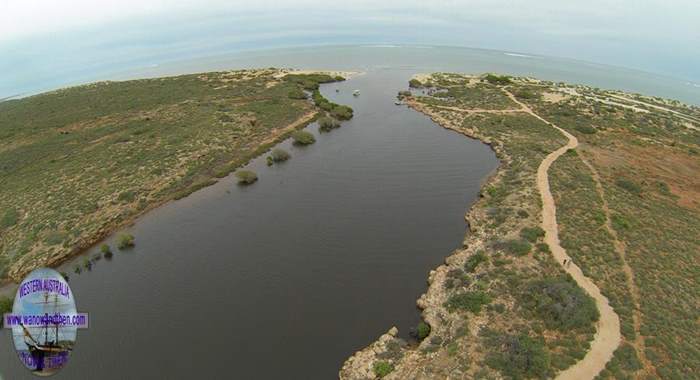
Cape Range National Park campsites
On the west coast a National Park runs from just south of the Tantabiddi boat ramp all the way to Yardie Creek and entry fees apply.
South of Yardie Creek you will find free camp sites but there are no facilities and NO WATER. You need a 4wd to cross the sandbar at Yardie Creek.
(NOTE: The creek may sometimes break through to the sea making access further south impossible.)
Of the campsites in the national park, Mesa Camp is the best for large vehicles. The main road is now sealed ALL THE WAY to Yardie Creek.
Water for washing is available south of the entrance to Neds and Mesa Camps on the main road. Entrance fee PLUS camping fees apply here as in
most other national parks.
Gidgee and spear gun use is prohibited in the park. Generators are allowed at some campsites but are restricted to 8am-9pm. All fires are
prohibited. Sites to be vacated by 10am.
Despite the number of visitors to the area, this coastline remains one of the most pristine and attractive in W.A. It is to be hoped that
it will be kept just as it is today for future generations to enjoy and that greedy developers are kept out of the area.
NED'S CAMP.
Good beaches for children, fishing. Can launch small boats over beach. 15 campsites. No generators in northern section.
GPS 22 00 10 S 113 55 57 E
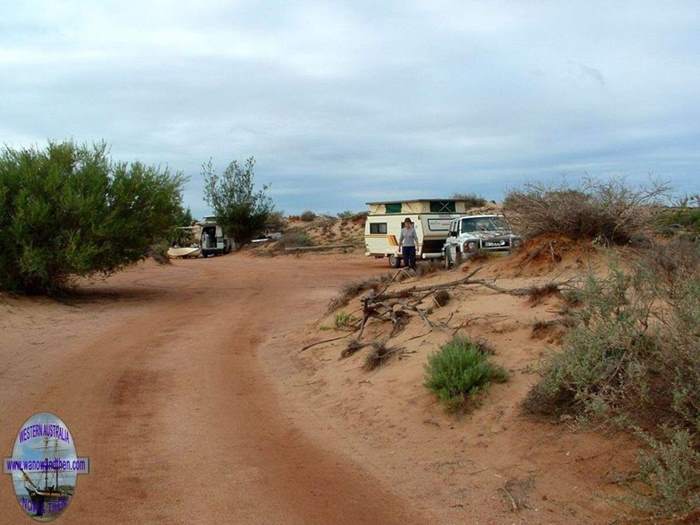
MESA CAMP.
Good beach for children, fishing. Overflow campsite. 13 campsites. *

NORTH T-BONE
Good beach for children, fishing. 3 campsites. Tents and camper trailers. No generators.
GPS 22 01 27 S 113 55 12 E
LAKESIDE
Excellent beach. Snorkel trail 400 metres to south. Can launch small boat over beach. Occasionally floods on peak tides. 7 campsites.
GPS 22 02 06 S 113 54 50 E
BUNGARRA
5 campsites. Overflow site when all other sites are full.
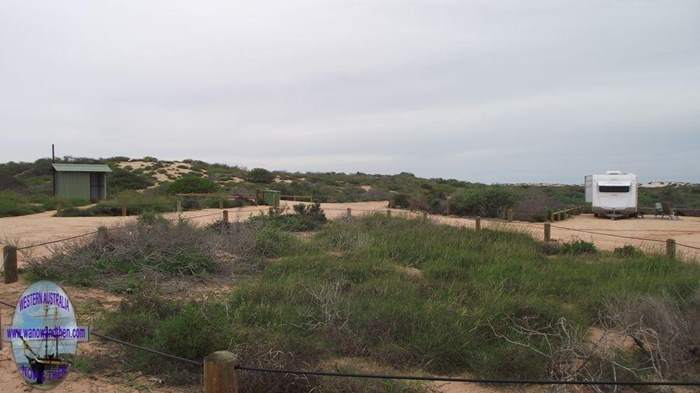
TULKI CAMP.
Good beach for children, fishing. Can launch small boats over beach. 8 campsites.
GPS 22 04 38 S 113 53 51 E
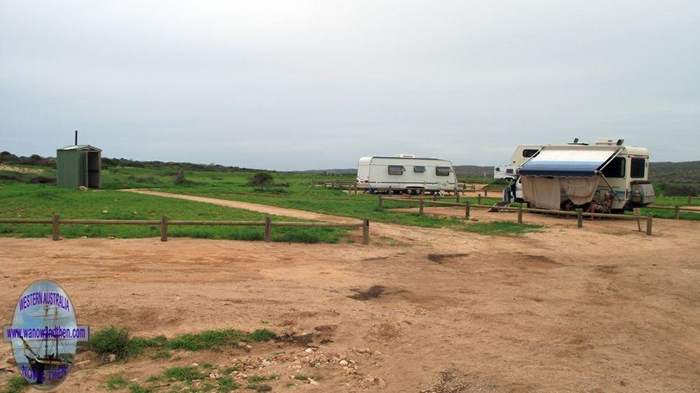
NORTH MANDU
Snorkeling. Good beach to south, close to reef. 4 campsites. Tents and camper trailers. NO FISHING. No Generators.
GPS 22 08 36 S 113 52 17" E
KURRAJONG CAMP
Toilet, Tables. Fishing, swimming. 26 campsites (5 tent, 5 caravan). No generators.
GPS 22 10 49 S 113 51 31 E
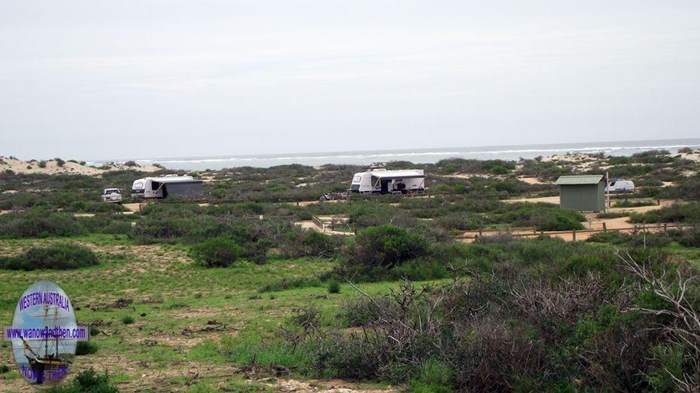
PILGRAMUNNA
Can launch small boat over beach. Occasionally floods on peak tides. 9 campsites.
GPS 22 11 43 S 113 51 17 E
OSPREY BAY
Toilet, shaded table. Small beach, good swimming. Beach. fishing permitted in this area. Excellent for viewing flora and fauna. Can launch small boat over beach. 15 campsites.
Beach fishing Ok, boat fishing prohibited. No generators in sites 1-4.
GPS 22 14 25 S 113 50 13 E

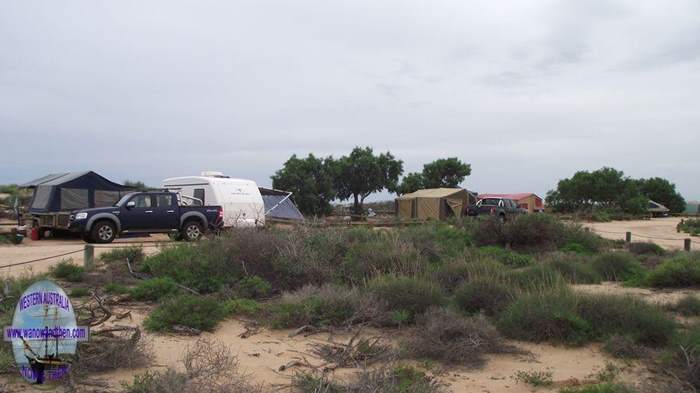
YARDIE CREEK CAMPSITE
8 campsites. Close to gorge walk trail. Picnic tables under trees. Toilets.
GPS 22 14 25 S 113 48 40 E
Note: If Yardie Creek opens to the sea then the following 2 campsites will not be accessible:
1 K CAMP
South of Yardie Creek. 4WD access only. Toilet, surfing. 6 campsites.
BOAT HARBOUR
South of Yardie Creek. 4WD access only. 4 campsites.
DAY USE AREAS
TURQUOISE BAY
Toilets Excellent beach Day use only No shade or shelter Ningaloo Marine Park sanctuary zone.

MANGROVE BAY
Bird and fauna hide.

OYSTER STACKS
Excellent snorkeling. Day use only. Ningaloo Marine Park Sanctuary Zone.

BLOODWOOD CREEK
Viewing platform. Day use only. No shade or shelter.

SANDY BAY
Two shaded tables, toilet Excellent beach for children Beach fishing permitted in this area. Day use only.
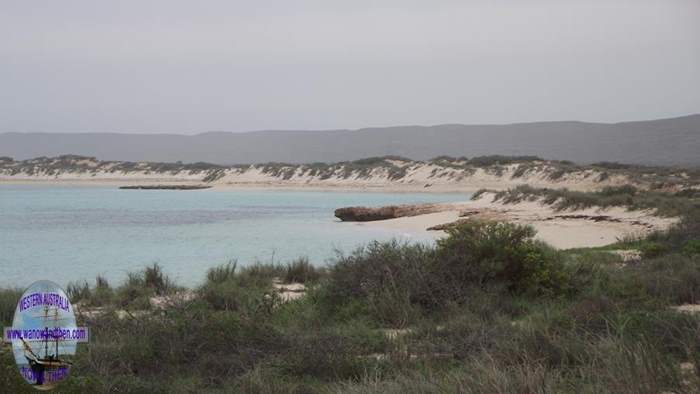
NINGALOO MARINE PARK
This park covers 260 kilometres along the coast adjacent to Cape Range National park. It encompasses one of the most significant marine sanctuaries on the west coast and the only extensive coral
reef system located close to shore. The reef lies between 100 metres and 4 kilometres off shore and is easily accessible.
Coral reefs usually form off the east coast of a land mass and the reef at Ningaloo is one of only two large reef systems in the world that have formed on the western side of a land mass. The
difference is the warm Leeuwin current that runs along the west coast which leads to coral growth as far south as Busselton.
The reef contains over 250 different coral species with the most common being Plate Coral, Brain Coral, Staghorn Coral and Cabbage Coral. The mass spawning of the coral takes place 8-9 days
after the full moon in either March or April each year. This event can turn the surface of the sea a reddish colour.
Although corals can grow as much as 5mm each year their growth is kept in check by certain species of fish that feed on coral polyps. It is thought that the fish can restrict overall coral growth in this
way by as much as 33%. Other coral damage can be caused by boats that anchor on the reef (anchors should always be placed in sand adjacent to reefs) and by natural predators like the crown
of thorns starfish and marine snails. The most significant damage is done by cyclones that can lift great plates of coral and smash them to pieces due to violent wave action.
There are at least 500 species of fish inhabiting or visiting the reefs and turtles, manta rays, dolphins, whale sharks and even humpback whales all frequent the waters. Turtles nest on the beaches from
October to April and can generally be seen coming ashore at night. There are also 600 species of shellfish and other molluscs inhabiting the area.
The first recorded European landing in this area was in 1618 by Capt. Jacobz and crew from the ship Mauritius. European settlement came in the 1880s with the establishment of Exmouth Station and
Yadie Creek Station in the early 1900s.
Between 1913 and 1957 a whaling industry operated along this coast and the ruins of one whaling station still remain at Norwegian Bay.
No fish zones were extended to cover more than 30% of the reef and these zones allow fish to breed up and repopulate areas where numbers are reduced by fishing.
Sunken Treasure
In 2004 the wreck of the Portuguese ship Correio da Azia was located by a team from the maritime Museum of WA. The ship had been carrying a consignment of silver and was wrecked in 1816.
The survivors of the shipwreck set off in a longboat and finally reached safety. Two of the crew went missing during a brief landing and were thought to have died but they were later picked up by an American ship.
Captain Joao Joaquim de Freitas wrote a report of the sinking and it surfaced in Lisbon in 1987. The hunt for the wreck took over 20 years and initial finds turned out to come from another unidentified
wreck that had hit the reef just 600 metres from the Correio da Azia.
The search yielded yet another wreck, that of the Stefano and it is now known that there are 5 wreck sites near Pt Cloates and another near Pt Maud to the south.
Over 1000 silver coins were recovered along with a a number of other artefacts including ship's canon.
Best time to visit:
|
Jan
|
Feb
|
Mar
|
Apr
|
May
|
Jun
|
Jul
|
Aug
|
Sep
|
Oct
|
Nov
|
Dec
|
|