|
|
|||

|

|
|

|
|
|
|||
CROCODILES
|
|
|
|
|
|
WE NEED YOUR SUPPORT. |
|


|
|
|
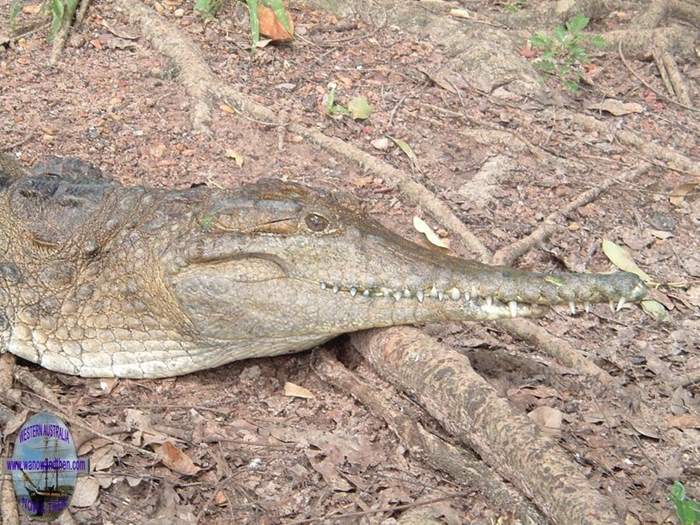
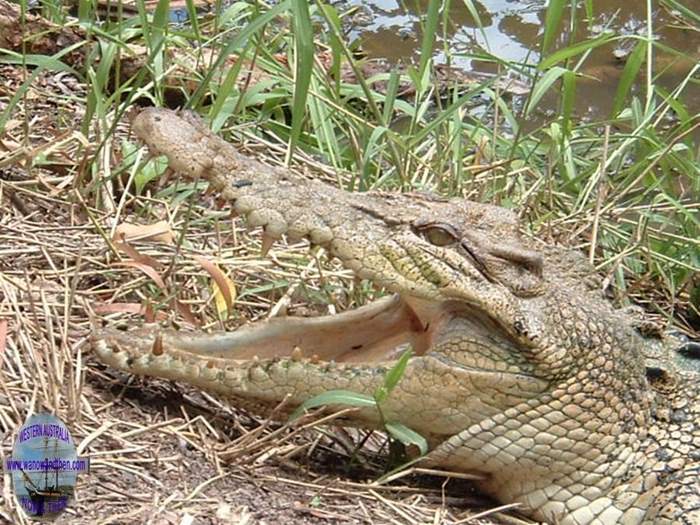
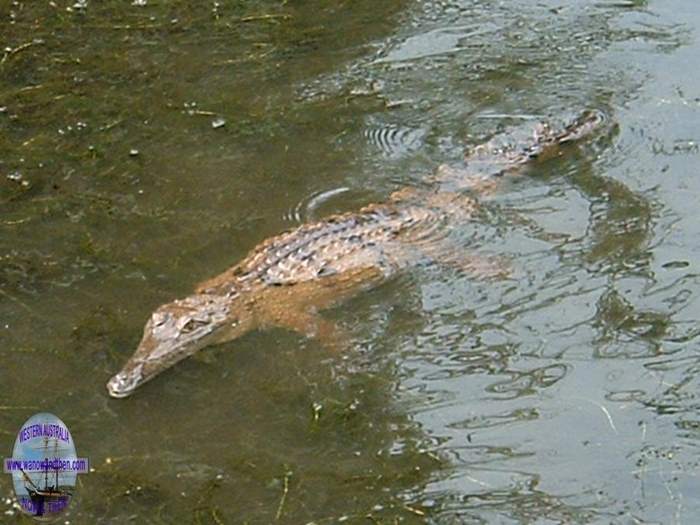
There are 2 species of crocodile in Australia, the freshwater (more properly known as the Johnstone River Crocodile) Crocodylus johnstoni and saltwater or estuarine croc Crocodylus porosus. Only the saltwater crocodile is a man-eater, but don't let the name fool you. It is also found in freshwater rivers and billabongs many miles from the sea. It's range now extends from Onslow in the west (one was even found as far south as Shark Bay and we note in the latest literature even Exmouth is now included in 'saltie' territory.) to Gladstone in the east. Saltwater crocodiles are extremely dangerous, you MUST always take precautions while in areas that they inhabit.
Americans, who may be used to the relatively placid alligator back in the States, should not make the assumption that the Australian Salty can be treated in a similar fashion. The salty is far more dangerous than the alligator with any croc over 2 metres being regarded as a possible man-eater and any close to two metres being capable of inflicting life threatening injuries.
Never swim in water ways known to contain crocodiles. If you must get wet do so at shallow rapids, and post a lookout, preferably someone with a rifle who is a good shot. Keep dogs and children away from river banks, and remember that saltwater crocs are common along beaches as well as in rivers. Crocodiles have been seen swimming in the open ocean as much as 30 kilometres from the nearest land.
Always take note of posted warning signs. If you are fishing stay well back from the bank and do not clean fish within 50 metres of the river. Do not camp next to a river. There are cases of crocs attacking people in tents.
If you are fishing the same river over a period of days do not return to the same spot each day.
Using canoes and small boats is dangerous, crocs do sometimes attack them. A 12 foot dinghy is no match for a twenty foot croc.
If fishing from a boat do not lean over the side to retrieve your catch, crocs can jump up out of the water. I have a picture of a 15 foot croc with almost it's entire body out of the water, vertical in the air.
The fact is that large saltwater crocodiles can and do kill people. Having legs and being able to run at high speed for short distances makes them a far more serious threat than sharks.
Sharks generally attack because they believe swimmers to be seals, and once they bite they sometimes realise their mistake and swim away. This almost never happens with a croc.
Allowing large estuarine crocodiles to inhabit areas frequented by large numbers of tourists is a recipe for disaster. The current campaign of complete protection for a species which is no longer under threat of extinction, will lead to more deaths. Their range extends further along the coast with each passing year.
What do you do if you are unlucky enough to be threatened by a crocodile in the wild? If you find yourself face to face with a croc don't count on it being afraid of people. They have been protected since 1972 (1970 in W.A.) and the large crocs have no fear of mankind. They do have a natural caution like most predators and there is a possibility of bluffing them by throwing things at them and making a lot of noise.
During the tragedy in 1987 that took Ginger Meadows life, two girls were swimming near the Cascades on the Prince Regent River when a large crocodile appeared. They swam to a ledge but were still waist deep in water. The girl swimming with Ginger threw her shoe at the croc and screamed at it, the croc was confused and stopped, at that moment Ginger panicked and jumped off the ledge into deep water and tried to swim to safety. This was just what the croc had been waiting for and immediately it attacked her with fatal results.
Crocodiles prefer to take people when they are on their own in the water, they seem to be more cautious about attacking people swimming close together. This is no guarantee of safety as attacks have come amid a group of people in only 45cm of water. In another case where a couple had to swim from shore to their boat, the croc waited until one climbed aboard before making its move.
Being in a small boat carries a fair degree of risk as well. Val Plumwood was attacked by a large croc while paddling a canoe and there was the infamous 'Sweetheart' who attacked and sometimes sank aluminium dinghies but strangely left their occupants alone.
In crocodile country there is no real safe place near or in the water. People have been attacked while sleeping near rivers, wading in knee deep water and most often while swimming. Aborigines claim that diving to the bottom puts the croc off attacking but there is at least one documented case of a diver being attacked and killed while diving for crayfish offshore. One unfortunate pub goer was coming home in Cairns in the early hours of the morning and saw what he thought was a croc near the side of the road. He stupidly kicked it and had the leg of his trousers torn off as a result. He was lucky not to loose more than his dignity.
One survivor of a croc attack who was diving at the time, managed to get his fist down the crocodile's throat. Crocodiles have a muscular flap of skin at the back of the throat that stops water entering while their mouths are open. In this instance it appears that once the victim got his fist past this flap of skin the croc started to take in water and would have drowned if it had not released his grip.
Having spent some two years living in crocodile country we never forgot to be very careful when near rivers and creeks but living with crocodiles full time seems to make people a bit blase. You will see locals wading around, leaning out of boats and doing lots of silly things near the water. Every now and then, one of them pays the price for not being vigilant.
Even camping near the water can be dangerous as a recent attack on a group in Queensland demonstrates. The campers had been at the same spot for 12 nights and the croc watched their routine. It knew when to attack and chose a time late at night when everyone was asleep. Two people were badly injured during the attack and the croc was finally shot. The recommended distance from the water for campers is 50 metres but we would more than double that in croc country.
The salt water crocodile is the largest of all crocodile species and its bite has been measured at over 2000 lbs per square inch making it the most devastating bite in the world. Crocodiles, unlike all other reptiles, have a 4 chambered heart and can partially regulate their body temperature despite being officially labeled as cold blooded. Crocodiles are survivors from the age of dinosaurs and are actually more closely related to birds than they are to other reptiles.
Although the freshwater species is not regarded as a threat to human life they can grow to be quite large (2-3 metres in length) and on occasion they have been known to attack people in what is believed to be territorial defence. They may not be as dangerous as the salty but must also be treated with a great deal of respect and caution. Freshwater crocs have been protected in W.A. since 1962.
|
|
Become a supporter of this website for just $5 a month
|