DESCRIPTION
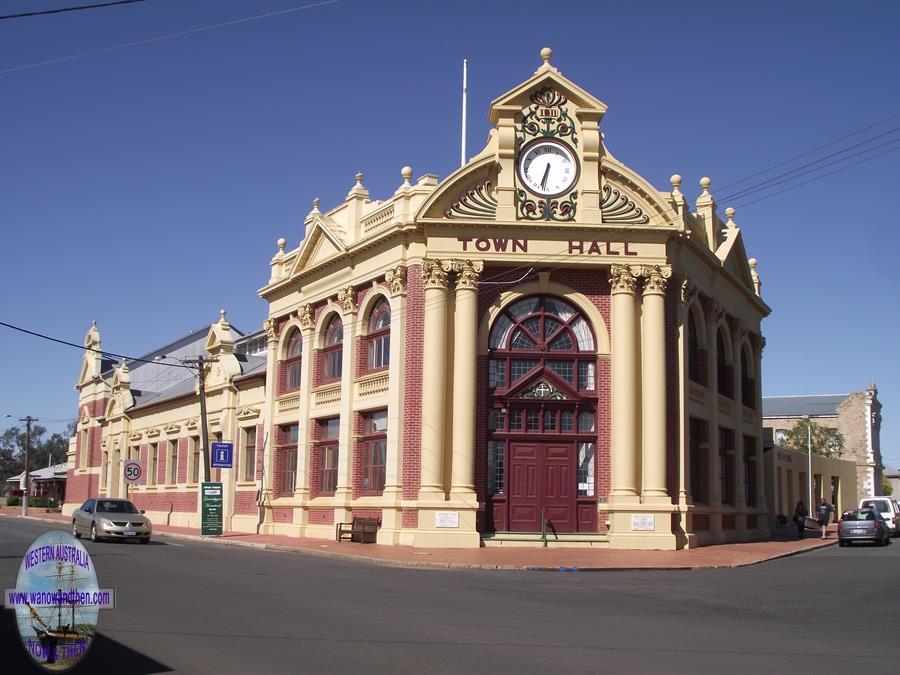
York is a popular day trip from Perth and holds an annual jazz festival. It is one of the best preserved historic towns in Australia with only
Charters Towers in Queensland offering a better example of architecture of the period. The town is classified by the National Trust.
Soon after 2000 York seemed to have fallen out of favour and as a result land prices in the area plummeted. Some real bargains were to be had with
5-10 acres going for as little as $15,000.
Since that time York has boomed again with prices for land and houses exploding. The sheer number of accommodation listings for York will give you an idea of
just how popular it has become.
Gwambygine Pool is located 10 kilometres south of York on the Beverley Road. It is one of the few remaining permanent pools on the Avon River. Picnic facilities
are provided and include tables, chairs, shelters and free gas BBQs. A boardwalk and viewing tower allow you easy access to the pool area.
HISTORY
The Avon Valley was the first area away from the main settlement on the Swan River (Perth) to bo opened up and settled.
The townsite was already being developed when it was officially gazetted in 1836 and the York Road was the settlement's life line to Perth.
The road was costly and difficult to maintain so to ensure that the road was maintained a toll was charged when travellers reached Mahogany Creek.
Once convicts began arriving in 1850 there was a reliable source of cheap labour for public works and in 1851 the tolls were abolished.
The York road could be a hazardous place for travellers and not just because of mud, flood and fire. Many travellers were attacked be Aboriginal
tribes and there were a number of spearings resulting in death.
The convicts, who had been the impetus behind the removal of the toll turned out to be a 'two edged sword'. Some of their number escaped and took to
robbing travellers on the York Road and even murders were committed by former inmates.
A number of wayside inns were established to cater for traveller's needs and due to changes in the route the road took, some of these inns very quickly
found themselves out of business. The route that is in use today (along the Great Eastern Highway) was more or less firmly established by 1850.
York is the oldest inland town in W.A. It was originally planned to call the town Yorkshire by explorer J.S. Clarkson, after the county in England. Later
the name was shortened to it's present form. The Aboriginal name for the area was Balladong.
Early settlers included Rev. Wittenoom and R.H. Bland.
In 1886 the coming of the railway meant that York became the stepping off point for miners heading for the goldfields around Coolgardie. It was from this
time to 1900 that many of the fine historical buildings you will see in the town today were constructed.
TALL TALES AND TRUE
No information for this section yet. If you know of something we can add here please contact us and let us know.
VIDEO
PROBLEM PLAYING THESE ON FIREFOX?
Turn off Enhanced Tracking Protection
Click the shield icon left of the URL near the top left
Slide Advanced Tracking Protection to OFF
OTHER INFORMATION
ATTRACTIONS
Old Gaol, Motor Museum, Residency Museum, Avon Park, Suspension bridge. Settler?s house, Miniature village, Mt Brown lookout, Gwambygine park Heritage trail, Avon River.
BUILDINGS OF NOTE
Castle Hotel 1842. Hospital 1896. Railway station 1886, Post office 1895. Residency museum 1843, Suspension bridge 1906, Town Hall 1911, Former Albion hotel 1860, Langsford house 1860, Court house complex 1852-1910, Old mill 1891, Faversham house 1830s, Holy Trinity church 1853, Marwicks barn 1870.
ELECTORAL ZONES
State : Central Wheatbelt
Federal : Pearce
OTHER INFO.
Postcode : 6302
Local Government : Shire of York
PHOTOS
Click on a thumbnail to see full sized picture.
Please note that using the https url will cause the photos not to show. To show photos use the standard http url.