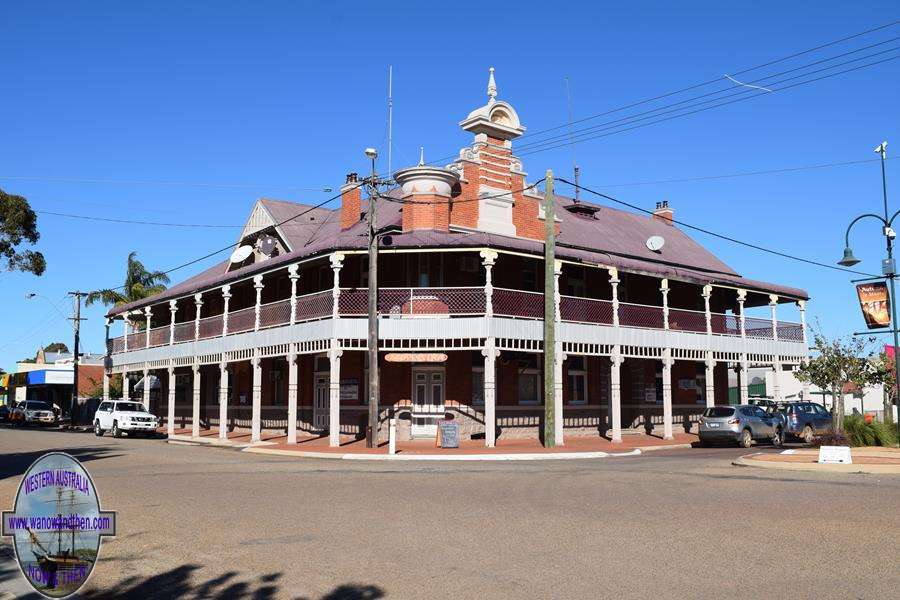
DESCRIPTION
The town is situated in one of the most interesting wildflower areas of the state. There are two distinct botanical areas around the town and this
results in a great variety of different flowers appearing each year between August and October. There are a number of wildflower drives around the
town ranging in length from 5 to 31 kilometres.
A useful collection of information about the district's early pioneers was published by the Moora Historical Society and the Shire of Moora in 1980
titled 'Some Commemorated Pioneers of the Moora District 1847-1917.'
Moora is the largest inland town in the mid-west and today is primarily associated with agriculture but thanks the the surrounding areas of wildflowers,
there is a steadily increasing tourism industry based in and around the town.
There are seven different walks around the town that are as follows:
Candy's Bush Reserve. 1km rated easy.
Stack-Cooper Reserve. 800 m circuit.
Carnaby's Cockatoo Interpretative Walk Trail. 7km loop rated easy. Follows the Moore River.
Karamarra Reserve. Not a formal walk but bushland. Located 8 km west of Moora on the Dandaragan Road.
Cemetery-Airstrip Road Reserve. Located next to the Cemetery.
Wheatbin Road Reserve. 1.5 km walk located on Wheatbin Road 5km south of town.
Heritage tRail.
North of Moora, a little south of Watheroo on the east side of the road is the
Western Wildflower Farm. The farm produces dried wildflowers for the domestic and international
markets and it is an excellent place to gain some insight into the wildflowers of W.A.
The farm also has a shop where you can buy locally produced wildflower gifts as well as a host of related items. You can sit and watch a video about the
area and enjoy morning or afternoon tea or lunch.
During wildflower season the farm has about 120 visitors a day and provides up-to-date information about the best places to visit in the area to see the
latest blooms.
HISTORY
George Fletcher Moore discovered the Moore River on
an expedition in 1836 but the distance from settlements further south meant that settlement did not start until 1846 when the Lefroy brothers took out
a pastoral lease. Cropping started soon afterwards but in 1851 the Government introduced legislation banning cropping on pastoral leases which
reduced cropping to self sufficient use only.
In 1860 the Government tried to encourage small farmers to purchase land by reducing the cost from one pound to ten shillings an acre. This had the
greatest benefit to the big land owners who quickly snapped up much of the available property. (Nothing changes much does it')
A Perth to Geraldton rail link started construction in 1887 and the railhead reached Moora in 1893.
The largest town between Perth and Geraldton, it was not gazetted until 1895. The name is supposed to have originated from the Aboriginal name of a
well west of the town (Maura). (Another source quotes 'moora-moora' or 'mau mau' which means good spirit.)
In 1919 Sir Norman Brearley flew his Tiger moth aeroplane to Moora and the whole town turned out to see the first delivery of newspapers by air in the state.
During WWII Moora had the dubious distinction of being the western end of the Brisbane Line. This was a line drawn across Australia from east to west and
denoted as the area that was to be defended in the event of a Japanese invasion.
The town grew steadily and roads in the townsite were bitumised as early as 1932. Returned servicemen arrived in the area after World War II and
strengthened the agricultural base of the region.
James Clinch established
Berkshire Valley in 1842.
The farm contains a number of historically significant buildings and the local historical society once operated a museum from the site but sadly it is now closed.
Each year on the Easter weekend the Moora Country Camp Out is held and offers a number of fun and interesting activities including a country music
concert, rodeo and Big Breakfast.
The Moore River may not have had anything to do with naming the town and at least one source says the name comes from the Aboriginal word 'moora'
which means blowfly.
TALL TALES AND TRUE
No information for this section yet. If you know of something we can add here please contact us and let us know.
VIDEO
PROBLEM PLAYING THESE ON FIREFOX?
Turn off Enhanced Tracking Protection
Click the shield icon left of the URL near the top left
Slide Advanced Tracking Protection to OFF
OTHER INFORMATION
ATTRACTIONS
Wildflowers in spring,
Annual agricultural show,
Moora Races,
Local speedway racing,
Heritage trail.
Moora Museum and Geneology Records Office,
Murals and Statues - Federation Park,
Western Wildflower Farm.
BUILDINGS OF NOTE
St. James church 1911,
Berkshire Valley Homestead 1847-84,
St. John's church 1908,
Uniting church 1909,
Post office 1912,
Moora Town Hall 1913,
The Drovers Inn 1909,
Rotary town clock.
ELECTORAL ZONES
State : Moore
Federal : Durack
OTHER INFO.
Postcode : 6510
Local Government : Shire of Moora
PHOTOS
Click on a thumbnail to see full sized picture.
Please note that using the https url will cause the photos not to show. To show photos use the standard http url.