DESCRIPTION
The Shire of Wickepin encompases the towns of Wickepin, Yealering, Harrismith,
Tincurrin and Toolibin.
The area's agricultural base includes large scale cropping of wheat, oats, barley, lupins and canola.
The town is possibly most famous as the home of author Abbert Facey who wrote the book 'A Fortunate Life'. It is a great read and a look back
at a way of life that is long gone.
Tractor's Graveyard.
On the main drag in Wickepin is a fenced enclosure of the largest collection of vintage tractors that I have ever seen. It is probably the largest
collection in Australia and possibly in the Southern Hemisphere. Nothing appears to be happening at this site and the tractors are all rusting away.
This is an awful shame, not only for the town as the tractors could be a big tourist draw card, but for the state and the country as we are gradually
losing part of our heritage. Something should be done about saving what is left of these machines and turning this truly awesome collection into a
tourist draw card.
HISTORY
The area was first settled in the 1890s although there is some information about an ex-convict, William Justin Smith, taking up land in 1868.
The town started to develop in 1906 and the arrival of the railway in 1909 prompted the construction of a police station and the establishment of
a road board. Originally the name Yarling was suggested but when time came to officially gazette the townsite Wickepin was chosen by Surveyor
General H.F. Johnston.
The townsite was gazetted in June 1908.
Albert Facey (author of A Fortunate Life - a book everyone should read) lived in the Wickepin area after leaving the goldfields. His house still
stands and it is possible to view it. Facey was in the Australian Army and served at Gallipoli. He returned to W.A. after the war and settled in
the Wickepin area where he grew wheat. The Great Depression forced him off the land and he moved to Perth. His book gives an excellent account of
life in the country and is one of the best historical novels I have ever read.
The source of the Avon, Murray and Blackwood rivers can be found in this shire.
The name of the town was an Aboriginal origing but the meaning is not known.
TALL TALES AND TRUE
No information for this section yet. If you know of something we can add here please contact us and let us know.
VIDEO
PROBLEM PLAYING THESE ON FIREFOX?
Turn off Enhanced Tracking Protection
Click the shield icon left of the URL near the top left
Slide Advanced Tracking Protection to OFF
Check out our other VIDEOS
NEW **** CLICKABLE VIDEO MAPS **** NEW
(C) Shire of Wickepin
OTHER INFORMATION
ATTRACTIONS
Toolibin Lakes, Albert Facey's house, Lake Yealering, Yarling Brook.
BUILDINGS OF NOTE
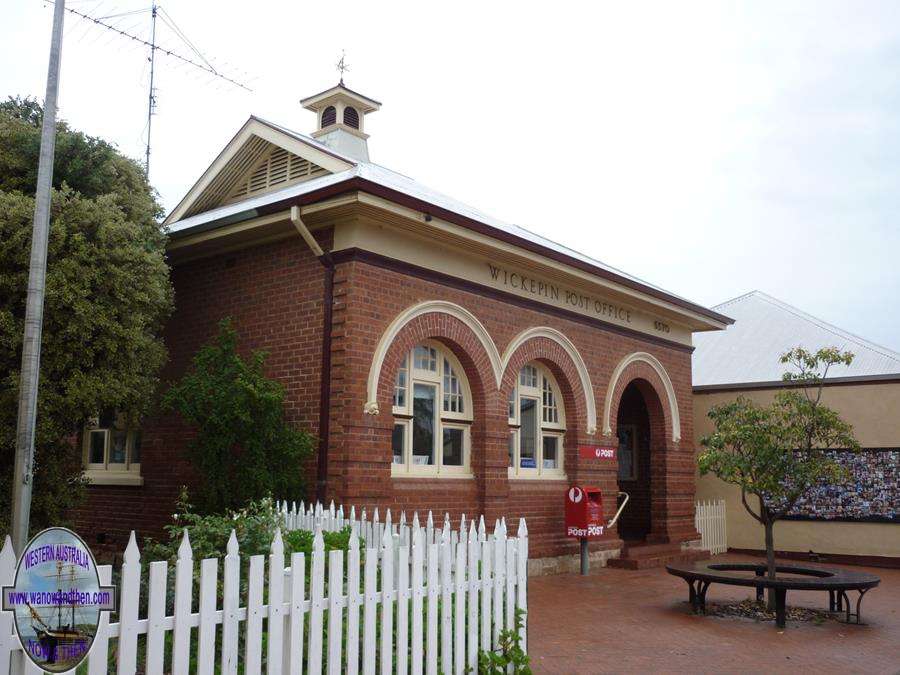
Boarding House 1910, Railway station, Albert Facey's house, Post office, Road Board hall.
ELECTORAL ZONES
State : Roe
Federal : O'Connor
OTHER INFO.
Postcode : 6370
Local Government : Shire of Wickepin
PHOTOS
Sadly something has disabled these photo sections on our website.
We don't know what it is or how to fix it.
Aplolgies for the inconvenience. We will work on finding a way round it.
.