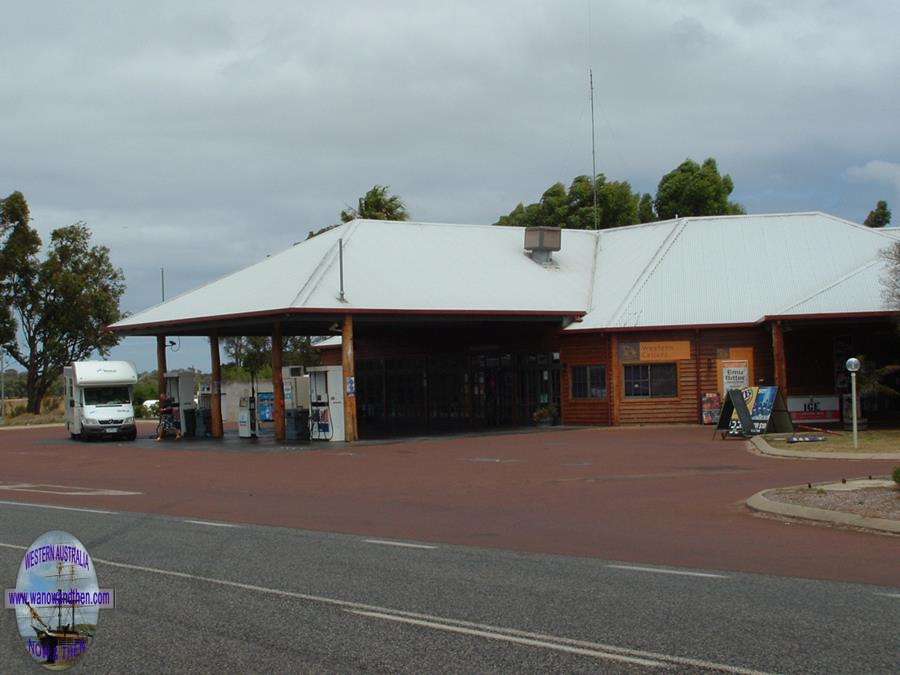
DESCRIPTION
Karridale is a small settlement located between Augusta and Witchcliffe in the
south west of the state.
The town is surrounded by places of interest and there is a lot to see and do in the area. For more information on this region
see Augusta and Margaret River.
The Karri Tree
Karri is an Aboriginal name for the hardwood tree Eucalyptus Diversicolor. The trees are native to south west Australia but seedlings found
their way to South Africa which now markets the hardwood world wide.
Karri trees mature at around 150 years and can live up to 300 years old. They can grow up to 80 metres tall that makes them one of the
tallest hardwood trees in the world.
The trunks of karri trees are so attractive because the tree sheds its outer covering of bark each year resulting in a myriad of differing
shades on each tree. Thankfully the old growth karri forest in W.A. is now protected from logging.
Karri, as a hardwood, is prized for heavy construction but unlike jarrah, it is unsuited for marine use.
Most karri trees can be found within 40kms of the coast and some of the best stands grow along the edge of inlets that are permanently open
to the sea.
HISTORY
The area was settled by Maurice Coleman Davies
in 1877 and was originally a timber town that fell into decline by 1913.
Market gardens covering some 40 acres were established in the 1880s and Chinese gardeners were employed to grow vegetables.
In 1902 eight timber mills amalgamated but the two that decided not to join the conglomerate were Bunning Brothers and Whitakers
(who are still in business today).
Between 1900 and the closure of the mills in the south west, some 17 million railway sleepers were supplied from the Karri and Jarrah
forests of this region.
In 1925 the first agricultural show was held at Karridale. The Busselton to Augusta railway
opened the same year.
Most of the original buildings were destroyed by a bushfire in 1961. In that year a series of bush fires raged across the south west
devastating nearly 2 million hectares and claiming 160 buildings. The areas affected included Kalamunda,
Mundaring, Pemberton, Dwellingup, Karridale,
Denmark and several other smaller centres. After a hot dry season a summer storm brought thunderstorms to
the area and lightning strikes set the bush alight. The first fires started in January 19th and many continued to burn for the next 4 weeks.
On February 24th the area experienced a heat wave with temperatures reaching 41C. High temperature combined with high winds to
reignite fires and send fire storms racing through the bush. Some of the small towns were wiped out and never re-built.
The townsite was not gazetted until 1979. Like Jarrahdale, this town takes its name from the type of timber
(karri) that surrounds it.
TALL TALES AND TRUE
No information for this section yet. If you know of something we can add here please contact us and let us know.
VIDEO
PROBLEM PLAYING THESE ON FIREFOX?
Turn off Enhanced Tracking Protection
Click the shield icon left of the URL near the top left
Slide Advanced Tracking Protection to OFF
Nothing Available.
OTHER INFORMATION
ATTRACTIONS
Boranup Forest, Hamelin Bay, Augusta.
BUILDINGS OF NOTE
Unknown.
ELECTORAL ZONES
State : Blackwood-Stirling
Federal : Forrest
OTHER INFO.
Postcode : 6288
Local Government : Shire of Augusta / Margaret River
PHOTOS
Click on a thumbnail to see full sized picture.
Please note that using the https url will cause the photos not to show. To show photos use the standard http url.