|
|
|||

|

|
|

|
|
|
|||
|


|
BRUNSWICK JUNCTION
GPS 33 15 36 S 115 50 15 E
|
|||||||||
| ||||||||||
|
|
||||||||||
|
WE NEED YOUR SUPPORT. |
||||||||||


|
|
|
|
|
STATISTICS
SERVICES
CARAVAN PARKS
HOTEL / MOTEL / B and B
|
DESCRIPTION
Located on the South West Highway north of the Collie turn off. This is a typical small country town whose importance to those travelling the highway is minimal.
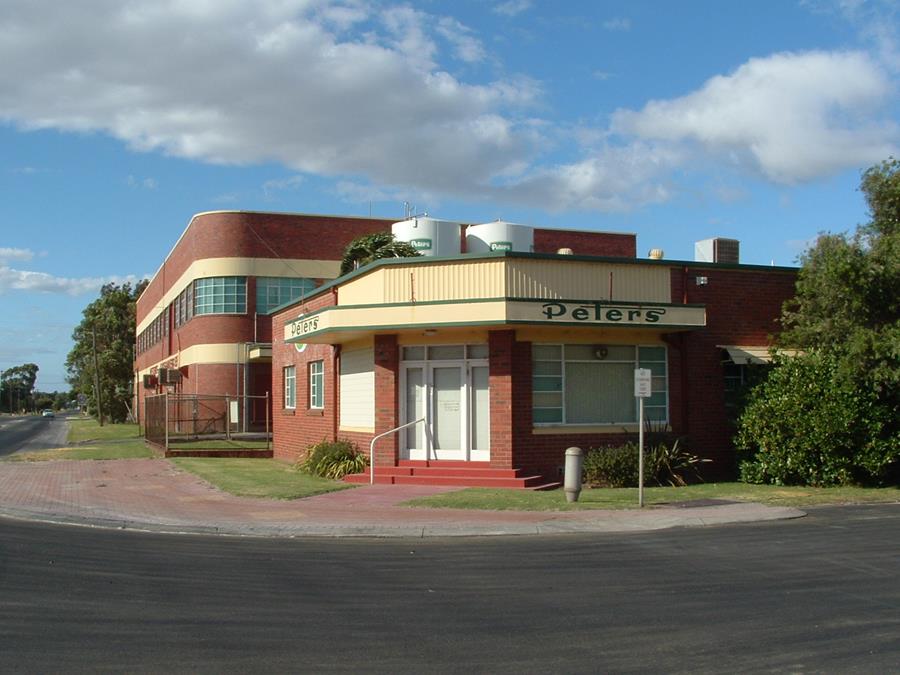
The area is known for dairy production and the old Peter's factory still stis by the side of the main road.
HISTORY
The town was founded in 1898 and named after the nearby Brunswick River. The River was named by J.S. Roe in 1830 after The Duke of Brunswick (Frederick William) who had been Captain Stirling's commanding officer aboard HMS Brazen. The Duke was later killed at the battle of Quatre-Bras just prior to the French defeat at Waterloo.
The Aboriginal name for this area is Mue-De-La.
Marshall Clifton established Alverstoke, the first farm in the area, in 1842. The rivers in the area formed a substantial barrier to travel and the first bridge over the Brunswick River was opened in 1845 and was built by William Forrest ( John Forrest's father.) A bridge near where Brunswick developed was built in 1862.
In 1864 the Frogmore school was built and was also used as a church on Sundays. Like many bush schools it was to become a focal point for the surrounding settlers. A second school opened in 1896 after a gap of over 4 years when no school was open in the area. It was not until 1966 that a school was built in the town itself.
In 1893 the railway line arrived at Brunswick and the following year the post office opened. In 1898 a spur line to Collie was constructed.
The area around the site, the town would eventually develop on, was called Wellington (after Arthur Wellsley, Duke of Wellington.) The Wellington Road Board was formed in 1871 and due to the area being broken up into smaller sections, the Bunbury Road Board was formed in 1894 and the Brunswick Road Board was formed a year later.
Two of the most important businesses to come to town were Brown's Dairies and Peter's Creameries. They were to be a mainstay of the town for a very long time.
In December 1933 the Wellington Dam opened. In 1944 the dam wall was raised by 3 feet and in 1960 after a major re-construction, it was raised a further 50 feet. The dam now supplies water to many wheat belt towns including: Brookton, Pingelly, Popanyinning, Cuballing, Narrogin, Highbury, Wagin, Woodanilling, Katanning, Broomehill, Gnowangerup, Kojonup, Dumbleyung, Wickepin, Yealering, Bullaring, Williams, Darkan, Muja, Collie and Allanson.
Over the years, a succession of overseas wars laid a heavy hand on most country towns and Brunswick has been no exception. No less than 40 Brunswick men gave their lives during the First, Second and Korean wars.
TALL TALES AND TRUE
Milking the Dairy
There is a tale about a dairy farmer who used to supply milk to Browne's (Jack Shine) and how one day he arrived at the delivery area with a very battered 12 gallon milk churn. When asked about the condition of the churn Jack said it had fallen off his wagon. Later in the pub he was heard to remark that the dents had actually come from the blunt end of an axe and he was now delivering 11 gallons and being paid for 12.
The very same farmer is also credited with selling an old horse to a priest with the words 'he doesn't look so good but he's all right.' When the priest returned a couple of days later complaining that the horse was blind, Jack simply said, 'I told you he didn't look so good.'
The hazards of the bush.
George Clifton was working at Alverstoke reaping grain when he was bitten by a black snake with a red belly (said to be very deadly by the local Aborigines). The snake had wrapped three coils around his forearm and as he tried to remove it, it bit him. He rushed to the house and sprinkled gun powder over the bite site and then ignited it. After doing this three times he hurriedly rode off to Australind to seek medical care.
On arrival the the wound was cauterised and laudanum and ammonia was applied. Even though the treatment sounds almost worse than the original bite, George apparently suffered no lasting ill effects.
MAP
VIDEO
PROBLEM PLAYING THESE ON FIREFOX?
Video available from April 13th 2024
OTHER INFORMATION
ATTRACTIONS
Brunswick Pool, White Rocks, Brunswick Cow, Beela Valley, Annual agricultural show, White Rocks Dairy.
BUILDINGS OF NOTE
Peter's Factory, Churches, Hotel, Shire hall, Railway cottages, Alverstoke.
ELECTORAL ZONES
State : Murray-Wellington Federal : Forrest
OTHER INFO.
Postcode : 6224 Local Government : Shire of Harvey
PHOTOS If photos are available, click on a thumbnail to see full sized picture.
|




|
Become a supporter of this website for just $5 a month
|